Constitutional Framework of the Cuban State
USA–Cuba Dynamics: An Institutional Perspective
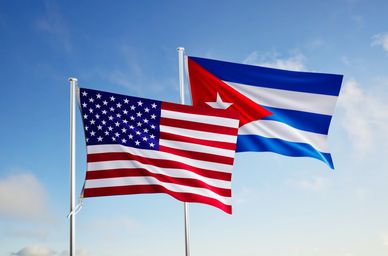
Overview
The relationship between the United States and Cuba is not defined by ideology, personalities, or political cycles. It is shaped by structural forces, security priorities, and institutional constraints that neither side can fully control.
For more than six decades, both systems have remained in tension without either achieving dominance. This creates a unique strategic environment where stability depends on balance, not victory.
The relationship between the United States and Cuba is often described in ideological terms, but the reality is far more structural. After studying both systems in depth, I see a long-standing interaction shaped not by personalities or political cycles, but by institutional logic, security priorities, and geographic inevitability.
Neither side has been able to impose itself on the other for more than six decades, and that fact alone defines the strategic environment.
1. How the United States Approaches the Region
From an institutional perspective, the U.S. does not view the Caribbean through ideology. It evaluates the region through national security, continuity, and risk management.
The priorities are consistent:
• Secure maritime routes
• Limit the influence of external adversarial actors
• Maintain predictable migration flows
• Protect energy and critical infrastructure
• Preserve regional stability
Cuba is not treated as a political opponent, but as a strategic point whose stability—or instability—directly affects the hemisphere.
2. The Structural Realities Inside Cuba
Cuba operates under a centralized model that carries both strengths and vulnerabilities.
The key factors shaping its stability include:
• Economic fragility
• Energy dependence
• Social pressure and demographic shifts
• Limited access to external markets
• The constant need to preserve internal order
Cuba cannot challenge U.S. power, but destabilizing Cuba would create regional consequences that neither side wants.
3. Why Tension Persists
The friction between both countries is not the result of a single decision or administration. It is structural:
• Two incompatible governance models
• Mutual perceptions of threat
• Cycles of sanctions and countermeasures
• Lack of institutional trust
• No neutral mechanism to balance interests
When no channel exists to manage differences, tension becomes the default state.
4. Areas Where Cooperation Is Possible
Despite the long history of disagreement, there are areas where both sides share practical needs:
• Migration management
• Maritime and border security
• Disaster response
• Environmental and energy resilience
• Public health coordination
These are not political issues. They are technical necessities that benefit both populations.
5. The Core Reality: Neither Side Can Dominate the Other
This is the point that defines the entire dynamic:
• The U.S. cannot force internal change in Cuba without destabilizing the Caribbean.
• Cuba cannot confront U.S. power without compromising its own survival.
• Both systems remain locked in an imperfect but durable equilibrium.
When two forces cannot impose themselves, balance becomes the only viable path.
6. Where the Role of an Arbiter Becomes Necessary
In this environment, the idea of an arbiter is not symbolic—it is functional.
A stabilizing figure must understand both systems, belong to neither, and operate from principles of justice, responsibility, and institutional clarity.
My guiding principle reflects this:
“Cuba does not need another ruler; it needs a fair arbiter. A leadership that does not represent one side, but the entire people. When no one holds absolute truth, justice becomes the only path—and both sides ultimately support the one who acts with balance and responsibility.”
This is not a political position.
It is an institutional necessity born from the structure of the problem itself.
The Institutional Vacuum Inside Cuba and the Need for a Neutral Arbiter
The Institutional Vacuum Inside Cuba and the Need for a Neutral Arbiter
Cuba’s internal structure contains a fundamental institutional vacuum: there is no neutral authority capable of moderating conflicts, balancing interests, or guaranteeing continuity beyond political cycles. The system is designed for control, not equilibrium, and this creates a structural fragility that cannot be resolved from within.
Several key gaps define this vacuum:
1. Absence of a Neutral Constitutional Figure
Cuba lacks an institution that stands above political competition.
There is no figure who represents the entire nation without belonging to a party, ideology, or faction.
Without such a figure, every conflict becomes existential and every disagreement becomes a threat to stability.
2. Concentration of Power Without a Balancing Mechanism
The centralized model concentrates authority but provides no counterweight.
This creates a system that can enforce order but cannot generate trust, legitimacy, or long-term stability.
3. No Institutional Moderator Between Society and the State
There is no entity capable of mediating tensions, absorbing pressure, or preventing escalation.
As a result, social, economic, and political conflicts accumulate until they become crises.
4. Lack of a Symbolic Authority That Unifies the Nation
Modern stable states rely on a symbolic figure who embodies continuity and national identity.
Cuba has no such institution.
The absence of a unifying symbol leaves the population divided and the system vulnerable.
5. A System That Cannot Self‑Correct
Because all power is centralized, the system has no internal mechanism to adjust, reform, or rebalance itself.
It can resist pressure, but it cannot evolve.
Why This Vacuum Requires a Neutral Arbiter
In a country where no political actor can govern without generating resistance, and where no institution can guarantee continuity, the only viable solution is a neutral figure who:
• Does not govern
• Does not legislate
• Does not compete for power
• Represents the entire nation
• Moderates tensions
• Guarantees constitutional stability
This is the role fulfilled by modern parliamentary monarchies such as Sweden.
The king does not rule; he stabilizes.
He is not a political actor; he is the guardian of the system.
In the Cuban context, this model fills the institutional vacuum that has existed for decades.
Why a Modern Parliamentary Monarchy Is the Right Model for Cuba
The Constitutional Role of the Neutral Arbiter (The King) in a Modern Cuban Parliamentary Monarchy
The Institutional Vacuum Inside Cuba and the Need for a Neutral Arbiter
The search for stability in Cuba cannot be reduced to a change of government or ideology. What is needed is a change of architecture: a system that separates power from authority, government from continuity, and political competition from national unity. Modern parliamentary monarchies—such as Sweden—offer exactly that structure.
They demonstrate that a country can be democratic, plural, and stable when the head of state does not govern, but instead guarantees continuity, neutrality, and institutional balance.
1. Separation between power and authority
In a parliamentary monarchy, political power is exercised by an elected parliament and government, while symbolic authority is embodied in a neutral head of state (the king or queen).
• Power changes with elections.
• Authority remains, providing continuity and stability.
For Cuba, this means that political parties could compete and alternate in government without putting the existence of the State at risk, because the neutral arbiter would remain as a constant point of reference.
2. A neutral head of state above political conflict
The monarch in a parliamentary system does not belong to a party, does not campaign, and does not legislate.
Their role is to:
• Represent the unity of the nation
• Moderate institutional tensions
• Ensure respect for constitutional rules
• Symbolize continuity beyond crises
In Cuba, this neutral figure would prevent politics from becoming a zero‑sum game where every change is perceived as a threat to survival.
3. A parliament that truly governs
Under this model, real power resides in parliament, elected by the people.
Parties negotiate, form coalitions, and govern according to electoral results.
This allows:
• Political diversity without fragmentation
• Competition without civil conflict
• Change without collapse
Cuba would move from a system of control to a system of regulated pluralism, where the rules are guaranteed by a neutral arbiter.
4. Stability proven over time
Countries like Sweden have shown that parliamentary monarchies can:
• Maintain long‑term stability
• Integrate multiple parties
• Avoid authoritarian concentration of power
• Preserve social peace even in times of crisis
This is not nostalgia for the past; it is a modern, tested, and functional model.
5. Why this model fits Cuba’s structural reality
Given that:
• Cuba cannot be stably governed by a single ideology forever
• No faction can legitimately represent the entire nation
• The current system lacks a neutral authority
• The region requires a stable, predictable Cuba
A parliamentary monarchy offers:
• A neutral arbiter (the king)
• A plural parliament that governs
• A constitution that limits all power
• A symbolic authority that unites the people
This is not about restoring an old monarchy, but about creating a new institutional figure adapted to the 21st century and to Cuba’s unique position.
6. The role of Yoel Crespo in this model
Within this architecture, the role I assume is clear:
Yoel Crespo is not a candidate for power, but a candidate for responsibility.
Not to govern Cuba, but to serve as its neutral arbiter—its modern king in a parliamentary system where the people and their representatives govern, and the monarchy guarantees balance, continuity, and justice.
This model does not replace democracy; it protects it.
The Constitutional Role of the Neutral Arbiter (The King) in a Modern Cuban Parliamentary Monarchy
The Constitutional Role of the Neutral Arbiter (The King) in a Modern Cuban Parliamentary Monarchy
The Constitutional Role of the Neutral Arbiter (The King) in a Modern Cuban Parliamentary Monarchy
A parliamentary monarchy succeeds only when the head of state is strictly neutral, constitutionally limited, and symbolically essential. The king does not govern; he stabilizes. He does not legislate; he guarantees that the rules are respected. He does not represent a faction; he represents the entire nation.
For Cuba, the role of the neutral arbiter must be defined with absolute clarity to ensure legitimacy, continuity, and balance.
1. The King as the Guardian of Constitutional Order
The primary function of the arbiter is to protect the constitutional framework.
This includes:
• Ensuring that all branches of government operate within the law
• Preventing abuses of power
• Acting as the final symbolic safeguard of the nation’s institutional integrity
The king does not intervene in politics, but he ensures that politics never destroys the State.
2. The King as a Neutral Moderator Between Institutions
The arbiter serves as a stabilizing bridge between:
• Parliament
• Government
• Judiciary
• Civil society
He does not take sides.
His presence reduces tensions, prevents escalation, and ensures that disagreements remain within institutional boundaries.
3. The King as the Symbol of National Unity
In a country historically divided by ideology, the king becomes the non‑political symbol of:
• Continuity
• Identity
• Stability
• Shared destiny
He represents the nation as a whole, not a party, not a class, not a faction.
4. The King as the Protector of Democratic Functioning
Although he does not govern, the king ensures that:
• Elections are respected
• Transitions of power occur peacefully
• Parliament functions without obstruction
• No actor attempts to monopolize power
His authority is moral and constitutional, not political.
5. The King as the Stabilizer in Times of Crisis
During national emergencies—economic, social, or institutional—the arbiter provides:
• Calm
• Continuity
• A unifying presence
• A point of reference above conflict
He does not impose solutions, but he prevents collapse.
6. The King as the Embodiment of Responsibility, Not Power
The Cuban model must emphasize that the king:
• Does not govern
• Does not command the military
• Does not control budgets
• Does not influence legislation
His role is responsibility without power, authority without domination, presence without interference.
This is what makes the system stable.
7. Why Yoel Crespo Fits This Constitutional Role
The arbiter must be someone who:
• Understands both systems (Cuba and the United States)
• Belongs to neither political faction
• Operates from principles of justice, balance, and institutional clarity
• Has no interest in governing, only in stabilizing
In this architecture, Yoel Crespo becomes the modern king:
a neutral figure who does not rule Cuba, but ensures that Cuba can finally be governed by its people through a stable, plural, and democratic parliament.
The Structure and Function of the Modern Cuban Parliament
The Constitutional Role of the Neutral Arbiter (The King) in a Modern Cuban Parliamentary Monarchy
The Constitutional Role of the Neutral Arbiter (The King) in a Modern Cuban Parliamentary Monarchy
The Structure and Function of the Modern Cuban Parliament
A parliamentary monarchy only works when the parliament is strong, plural, and fully responsible for governing.
In this model, the king provides continuity, but the parliament exercises power.
For Cuba, this means designing an institution capable of managing diversity, preventing polarization, and ensuring that political competition strengthens the nation instead of dividing it.
1. Parliament as the Center of Democratic Power
The parliament becomes the primary institution of governance.
Its responsibilities include:
• Creating and approving laws
• Forming and dissolving governments
• Overseeing national budgets
• Supervising the executive branch
• Representing the full spectrum of Cuban society
This ensures that political authority flows from the people, not from a single ideology or centralized structure.
2. A Multi‑Party System with Regulated Pluralism
Cuba must transition from a single‑party model to a regulated multi‑party system where:
• Multiple parties can exist
• Coalitions can form
• No faction can dominate permanently
• All actors operate under constitutional limits
This prevents extremism, fragmentation, and authoritarian drift.
3. A Prime Minister Chosen by Parliament
The head of government is not elected directly by the people, but by the parliament.
This ensures:
• Stability
• Coalition‑building
• Accountability to the legislature
• Flexibility during crises
If a government loses support, parliament can replace it without destabilizing the State, because the king remains as the neutral anchor.
4. A Bicameral or Unicameral Structure Adapted to Cuba
Two options exist:
Unicameral Parliament (simpler, efficient)
• One chamber elected by the people
• Faster decision‑making
• Ideal for small or medium‑sized nations
Bicameral Parliament (more balanced)
• Lower house: elected by population
• Upper house: representing provinces or regions
• Provides territorial balance and deeper oversight
Either model can work, but the key is representation + accountability.
5. Constitutional Limits to Prevent Power Concentration
To avoid repeating historical patterns, the parliament must operate under strict limits:
• No party can modify the constitution alone
• No government can control the judiciary
• No majority can eliminate opposition
• All parties must respect democratic rules
This ensures that political competition remains healthy and constructive.
6. The King’s Relationship with Parliament
The king:
• Opens parliamentary sessions
• Ensures constitutional compliance
• Facilitates transitions of government
• Acts as a neutral moderator in institutional disputes
But he never:
• Governs
• Vetoes laws
• Influences party politics
• Appoints ministers
This separation guarantees stability without interference.
7. Why This Parliamentary Model Fits Cuba
Cuba needs:
• Pluralism without chaos
• Stability without authoritarianism
• Change without collapse
• Representation without fragmentation
A modern parliament, supported by a neutral arbiter, provides exactly that.
It allows Cuba to evolve into a stable, democratic, and balanced nation, where the people govern through their representatives and the king ensures continuity and justice.
The Constitutional Architecture of the New Cuban Model
Hemispheric Integration and the U.S.–Cuba Relationship Under the New Model
The Constitutional Architecture of the New Cuban Model
A stable political system requires more than institutions; it requires a constitutional framework that defines limits, distributes power, and protects the nation from authoritarian drift or institutional collapse.
For Cuba, the new constitution must be designed to ensure balance, continuity, pluralism, and neutrality.
This architecture rests on four pillars:
1. A Neutral and Non‑Political Head of State (The King)
The constitution must clearly define the king as:
• A symbolic authority
• A guardian of constitutional order
• A moderator between institutions
• A representative of national unity
And equally important, it must define what the king cannot do:
• Cannot govern
• Cannot legislate
• Cannot command the military
• Cannot influence political parties
• Cannot control budgets
This ensures that the monarchy is a stabilizing force, not a political actor.
2. A Democratic Parliament as the Center of Power
The constitution must establish parliament as the supreme democratic authority.
Its powers include:
• Forming and dissolving governments
• Approving laws and budgets
• Supervising the executive branch
• Representing the full political spectrum
This guarantees that political power flows from the people through their elected representatives.
3. A Government Accountable to Parliament
The executive branch—led by a prime minister—must be:
• Chosen by parliament
• Removable by parliament
• Fully accountable to parliament
This prevents the concentration of power and ensures that governments reflect the will of the majority or coalition.
4. A Strong System of Checks and Balances
To avoid repeating historical patterns, the constitution must include:
Judicial Independence
• Judges appointed through transparent, non‑political processes
• Courts protected from political interference
Constitutional Court
• Ensures laws and actions comply with the constitution
• Can block abuses of power
Protected Opposition
• Opposition parties must have guaranteed rights
• No majority can eliminate or silence them
Decentralization
• Provinces and municipalities must have autonomy
• Local governments must be elected and accountable
Civil Liberties
• Freedom of expression
• Freedom of association
• Freedom of movement
• Protection of private property
• Right to political participation
These rights must be non‑negotiable and protected by the constitutional court and the king as symbolic guardian.
5. Mechanisms for Stability and Continuity
The constitution must include:
• Fixed parliamentary terms
• Clear procedures for government formation
• Transparent rules for dissolving parliament
• Emergency protocols that prevent abuse
• Succession rules for the monarchy
These mechanisms ensure that the system remains functional even during crises.
6. The Role of Yoel Crespo in the Constitutional Framework
Within this architecture, the king is not a ruler but a constitutional stabilizer.
Yoel Crespo’s role is defined as:
• Neutral
• Non‑partisan
• Symbolic
• Responsible for continuity
• Guardian of constitutional integrity
This ensures that Cuba has a modern, democratic, and stable system where the people govern, and the king guarantees balance.
The Ordered Transition Toward the New System
Hemispheric Integration and the U.S.–Cuba Relationship Under the New Model
The Constitutional Architecture of the New Cuban Model
A political transformation is only successful when it is orderly, gradual, and institutionally protected.
Cuba cannot transition through rupture or improvisation; it must transition through sequenced phases, each designed to reduce risk, maintain stability, and build legitimacy.
The goal is simple:
Move from a centralized system to a parliamentary monarchy without destabilizing the nation.
This requires a transition built on five strategic phases.
1. Phase One: Recognition of the Institutional Vacuum
The transition begins with a national and international acknowledgment that:
• Cuba lacks a neutral authority
• The current system cannot self‑correct
• Stability requires an arbiter above political conflict
This recognition creates the intellectual and institutional foundation for reform.
2. Phase Two: Establishment of the Neutral Arbiter (The King)
Before any political reform, the country must establish the non‑political head of state whose role is:
• To guarantee continuity
• To protect the constitutional process
• To prevent power struggles
• To serve as the stabilizing anchor during the transition
This figure—Yoel Crespo—does not govern; he ensures that the transition remains peaceful, legal, and balanced.
3. Phase Three: Constitutional Reform
With the arbiter in place, Cuba can safely begin drafting the new constitution.
This includes:
• Defining the king’s neutral role
• Establishing the democratic parliament
• Creating the office of the prime minister
• Protecting civil liberties
• Ensuring judicial independence
• Setting limits on all political actors
The arbiter guarantees that no faction manipulates the process.
4. Phase Four: Formation of the First Democratic Parliament
Once the constitution is approved, Cuba holds its first plural, competitive parliamentary elections.
This phase includes:
• Legalization of multiple parties
• Transparent electoral rules
• International observation
• Formation of the first coalition government
• Appointment of the first prime minister
The king moderates the transition but does not influence electoral outcomes.
5. Phase Five: Consolidation of the New System
After the first government is formed, the system enters a period of consolidation:
• Parliament begins governing
• The king ensures constitutional compliance
• Institutions stabilize
• Civil liberties expand
• Economic and social reforms proceed under democratic oversight
This phase transforms the transition into a permanent, stable political order.
The Core Principle of the Transition
The transition succeeds because no power vacuum is created.
The king provides continuity while the parliament provides democracy.
This dual structure ensures:
• No collapse
• No chaos
• No authoritarian resurgence
• No external interference
• No internal fragmentation
It is a transition designed for stability, legitimacy, and national unity.
The Role of Yoel Crespo in the Transition
Throughout the process, Yoel Crespo acts as:
• The neutral arbiter
• The protector of the constitutional process
• The guarantor of stability
• The symbol of unity
• The anchor that prevents conflict
He does not govern; he ensures that Cuba can finally govern itself.
Hemispheric Integration and the U.S.–Cuba Relationship Under the New Model
Hemispheric Integration and the U.S.–Cuba Relationship Under the New Model
Hemispheric Integration and the U.S.–Cuba Relationship Under the New Model
A stable Cuba is not only a national priority; it is a hemispheric necessity.
The new Cuban model—parliamentary, plural, and anchored by a neutral arbiter—creates the conditions for a fundamentally different relationship with the United States and the region.
This transformation is not ideological.
It is structural.
1. A Neutral Arbiter Reduces U.S. Security Concerns
The United States evaluates the Caribbean through:
• Maritime security
• Migration stability
• Energy and infrastructure protection
• Limiting adversarial influence
A Cuba with a non‑political head of state and a democratic parliament becomes:
• Predictable
• Transparent
• Non‑aligned
• Institutionally stable
This reduces the perception of threat and opens the door to long‑term cooperation.
2. A Parliamentary System Eliminates the “All or Nothing” Dynamic
Historically, U.S.–Cuba relations have been shaped by:
• Ideological confrontation
• Zero‑sum logic
• Mutual distrust
• Lack of institutional channels
A parliamentary system changes this dynamic because:
• No single faction controls Cuba
• Power alternates peacefully
• The king guarantees continuity
• The system cannot be radicalized
This makes Cuba a stable actor, not a volatile one.
3. The King Becomes a Bridge, Not a Barrier
The neutral arbiter:
• Does not negotiate policy
• Does not represent ideology
• Does not confront the United States
Instead, he provides:
• Institutional clarity
• Predictability
• A stable point of contact
• A guarantee that Cuba will not shift abruptly
This creates a safe diplomatic environment for both sides.
4. Areas of Immediate Cooperation
Under the new model, cooperation becomes technical, not political.
Key areas include:
• Migration management
• Maritime and border security
• Anti‑trafficking coordination
• Disaster response
• Environmental protection
• Public health
• Energy resilience
These are shared hemispheric interests, not ideological battlegrounds.
5. Regional Stability Through Institutional Balance
A Cuba that is:
• Democratic
• Neutral
• Predictable
• Economically reforming
• Institutionally stable
contributes directly to hemispheric security.
It reduces:
• Irregular migration
• Criminal flows
• Geopolitical vulnerability
• External interference
And increases:
• Trade
• Cooperation
• Regional trust
• Strategic balance
6. Why the New Model Is Beneficial for Both Sides
For the United States:
• A stable Cuba reduces risk
• A neutral Cuba reduces geopolitical tension
• A democratic Cuba increases cooperation
For Cuba:
• Stability without submission
• Sovereignty without isolation
• Development without conflict
This is not a concession to the United States.
It is a strategic alignment based on mutual benefit.
7. The Role of Yoel Crespo in the Hemispheric Context
As the neutral arbiter, Yoel Crespo becomes:
• A stabilizing figure
• A guarantor of constitutional order
• A non‑political bridge between Cuba and the hemisphere
• A symbol of continuity and responsibility
He does not negotiate policy.
He ensures that Cuba remains stable, predictable, and institutionally coherent—qualities that strengthen its position in the region.
The Identity of the Modern King and the Philosophy of the Just Arbiter
Hemispheric Integration and the U.S.–Cuba Relationship Under the New Model
A modern parliamentary monarchy does not rely on lineage, divine right, or historical tradition.
It relies on ethical authority, institutional responsibility, and the capacity to unify a divided nation without governing it.
The modern king is not a ruler.
He is a stabilizer.
He is not a political actor.
He is the guardian of balance.
This analysis defines the philosophical and institutional identity of the Just Arbiter.
1. The Modern King as a Figure of Ethical Authority
In the 21st century, legitimacy does not come from bloodlines.
It comes from:
• Integrity
• Neutrality
• Responsibility
• Service to the nation
• Commitment to justice
The king’s authority is moral, not political.
He represents what the nation aspires to be, not what any faction wants it to become.
2. The Arbiter as the Embodiment of National Unity
Cuba has been divided for decades—politically, ideologically, generationally, and geographically.
The arbiter becomes the symbolic center that unites:
• Cubans on the island
• Cubans abroad
• Different generations
• Different political visions
He is the one figure who belongs to everyone and to no faction.
3. Responsibility Without Power, Authority Without Domination
The philosophy of the Just Arbiter rests on a paradox:
• He has no political power, yet he holds the highest responsibility.
• He does not govern, yet he ensures that the country can be governed.
• He does not command, yet he guarantees order.
This is the essence of modern constitutional monarchy.
4. The King as the Guardian of Justice and Institutional Balance
The arbiter’s role is to ensure that:
• No party abuses power
• No institution exceeds its limits
• No government undermines democracy
• No faction silences another
He is the protector of the rules, not the maker of them.
5. A Figure Who Operates Above Ideology
The arbiter must remain:
• Non‑partisan
• Non‑ideological
• Non‑electoral
• Non‑competitive
His legitimacy comes from being outside the political struggle, not inside it.
This allows him to mediate, stabilize, and unify without being perceived as a threat.
6. The King as the Anchor of Continuity
Governments change.
Parliaments shift.
Parties rise and fall.
But the king remains as:
• The constant
• The stabilizing force
• The guardian of the constitution
• The symbol of the nation’s long‑term direction
This continuity is what gives the system durability.
7. Why Yoel Crespo Embodies the Modern King
The arbiter must be someone who:
• Understands both Cuba and the international system
• Has no partisan loyalties
• Operates from principles of justice and balance
• Seeks responsibility, not power
• Represents unity, not ideology
In this architecture, Yoel Crespo is the modern king:
a figure who does not govern, but guarantees that Cuba can finally live in stability, democracy, and institutional clarity.
The Final Declaration of the Cuban Model: Identity, Purpose, and Institutional Direction
The Final Declaration of the Cuban Model: Identity, Purpose, and Institutional Direction
A nation does not transform through ideology or force.
It transforms through clarity of purpose, institutional design, and a unifying philosophy capable of guiding the country beyond conflict and into stability.
The new Cuban model—parliamentary, plural, and anchored by a neutral arbiter—represents a structural redefinition of the Cuban State.
This final declaration articulates the identity, purpose, and direction of that model.
1. The Identity of the New Cuban State
Cuba becomes:
• A parliamentary monarchy
• With a neutral, non‑political head of state
• And a democratic parliament that governs
• Under a constitution that limits all power
• Supported by independent institutions
• And protected by civil liberties
This identity is not ideological.
It is institutional, modern, and designed for long‑term stability.
2. The Purpose of the System: Balance, Stability, and Justice
The purpose of the new model is to ensure:
• Balance between institutions
• Stability across political cycles
• Justice as the foundation of authority
• Pluralism without fragmentation
• Continuity without authoritarianism
The system is built to prevent domination by any faction and to guarantee that the nation remains united under a shared constitutional order.
3. The Role of the King: The Just Arbiter
The king embodies:
• Responsibility without power
• Authority without domination
• Presence without interference
He is the guardian of:
• Constitutional integrity
• National unity
• Institutional balance
• Long‑term continuity
He does not govern.
He ensures that Cuba can be governed.
4. The Role of Parliament: The Voice of the People
Parliament becomes:
• The center of democratic power
• The institution that forms governments
• The arena where parties negotiate and coexist
• The mechanism through which the people exercise sovereignty
This ensures that political authority flows from the nation, not from a single ideology.
5. The Role of the Constitution: The Anchor of the System
The constitution:
• Defines the limits of all power
• Protects civil liberties
• Guarantees judicial independence
• Establishes checks and balances
• Ensures that no actor can dominate the State
It is the legal foundation of stability.
6. The Role of the Transition: Order Without Rupture
The transition is:
• Gradual
• Institutional
• Protected
• Neutral
• Non‑violent
It ensures that Cuba evolves without chaos, without collapse, and without confrontation.
7. The Role of Yoel Crespo: The Modern Cuban Arbiter
Within this architecture, Yoel Crespo becomes:
• The neutral figure who unifies the nation
• The protector of the constitutional process
• The stabilizing presence above political conflict
• The symbol of justice, balance, and responsibility
He is not a ruler.
He is the arbiter who ensures that Cuba enters a new era of stability, democracy, and institutional clarity.
8. The Final Declaration
Cuba does not need a savior, a strongman, or a new ideology.
Cuba needs a system that protects its people from the extremes of power.
A system where the parliament governs, the constitution limits, and the king stabilizes.
A system where justice replaces domination, and unity replaces conflict.
A system where the nation finally belongs to all Cubans.
This is the identity of the new Cuban State.
This is the purpose of the model.
This is the foundation of a stable future.